What to Include in Your Home Inspector Directory Listing
Help homebuyers and real estate agents understand your services, service area, and experience with a clear, complete business profile.
9 Oct 2026
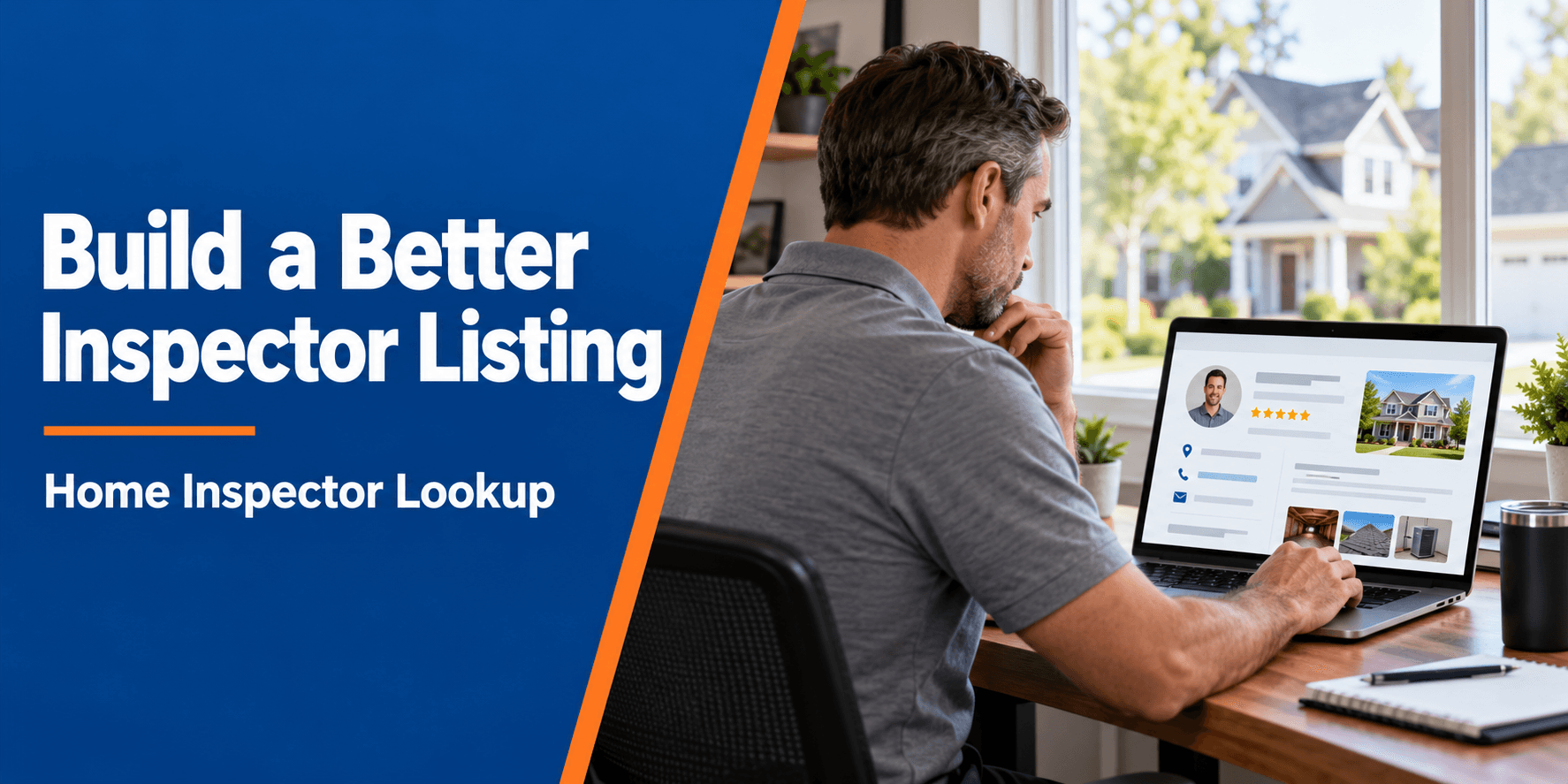
When a homebuyer or real estate agent finds your home inspection business online, they usually have a few immediate questions: Do you inspect homes in their area? Do you offer the services they need? How can they contact you? A useful directory listing answers those questions clearly and gives visitors a reason to learn more about your business.
Your listing does not need to tell your entire professional story. It should provide accurate information, explain what you offer, and make the next step easy. Here is what to include in your home inspector directory listing—and how to make each part more useful.
Use your recognizable business name
Start with the business name customers know from your website, signage, and other public profiles. Avoid adding a string of cities or phrases such as “best affordable home inspector” to the name field. Put location and service details in the appropriate sections of your listing instead.
A recognizable name helps visitors identify your company when they move between your directory profile and website. If you operate under a business name that differs from your legal entity, use the customer-facing name, and provide legal details only where specifically requested.
Write a description that answers customer questions
Your business description should explain who you serve, where you work, and what you inspect. Lead with the information a prospective customer needs rather than a general statement about your commitment to excellence.
For example, a description might say: “Example Home Inspections provides residential inspections for buyers, sellers, and homeowners in Springfield and nearby communities. We inspect existing homes, condominiums, and new construction, with sewer scope inspections available as an additional service.”
Follow that introduction with a few specific details about your approach. You might explain that you review findings with clients, provide photographs in your reports, or remain available for questions afterward. Include only statements that accurately reflect how your business operates.
Define your service area clearly
Customers need to know whether you can inspect their property. List the cities, counties, or regions you regularly serve, and make sure those locations match your actual coverage.
If you travel beyond your usual area, explain that availability and travel fees should be confirmed before booking. A precise service area is more useful than a broad claim that leaves customers unsure whether you will accept their appointment.
Avoid filling your description with repeated city names. A readable explanation of your coverage helps visitors understand your business without making the profile feel like a list of search terms.
List the services you actually provide
A buyer looking for a general home inspection may also need a sewer scope, pool inspection, or another service. Make it easy to see which services your business offers and which require a separate provider.
Depending on your business, your service list could include:
Buyer and pre-listing home inspections.
New construction inspections.
Builder warranty inspections.
Condominium inspections.
Sewer scope inspections.
Pool and spa inspections.
Radon testing.
Well or septic inspections.
Include only services you currently provide. If a service is performed by a partner or subcontractor, describe that arrangement accurately rather than suggesting you personally perform every evaluation. Clarify when additional services require a separate fee or appointment.
Explain your qualifications accurately
Your profile should help customers understand your background without making them interpret a collection of unexplained initials. Include relevant licenses, professional certifications, association memberships, and experience with particular property types.
Be specific about what each credential represents. A professional association membership, training certificate, and state license are different qualifications and should be described accordingly. If you mention years of experience, make clear whether that refers to home inspection work or a broader background in construction or related trades.
Avoid unsupported claims such as “the most qualified inspector in the state.” Concrete details about your experience and qualifications give customers something useful to evaluate.
Add a professional logo and relevant photographs
A clear logo helps visitors recognize your business, while photographs can introduce the person who will arrive at the property. Use images that look professional at small sizes and remain easy to understand when viewed on a phone.
Useful photographs might show you inspecting a property, explaining findings, or using equipment relevant to your services. Choose images you own or have permission to use, and protect client privacy by avoiding visible addresses, personal belongings, or identifiable people without permission.
If you use photographs of equipment, make sure they reflect services you actually offer. Images should support the information in your profile rather than create expectations your inspection does not meet.
Make contacting your business easy
Check your phone number, website address, and any available contact or booking links. A complete profile loses value if its main link leads to an outdated page or its phone number contains an error.
Send visitors to a page that helps them take the next step. That might be your inspection services page, quote request form, or scheduling page. If customers need to contact you before booking, explain what information to provide, such as the property address, approximate square footage, and preferred inspection date.
Avoid promising immediate availability unless you can reliably deliver it. Clear contact instructions help customers make an appropriate inquiry without guessing how your process works.
Describe what clients can expect
Buyers often want to understand the inspection process as much as the inspector’s qualifications. Where your profile allows it, explain how you review findings, when reports are typically delivered, and whether clients can contact you with questions afterward.
Use wording that leaves room for the actual circumstances of an appointment. For example, explain your typical report delivery time and confirm it when booking, rather than promising something you cannot consistently deliver. If you share a sample report on your website, direct visitors to it so they can evaluate your communication style.
These details help customers compare businesses beyond price. They also set expectations before the first phone call.
Review your listing as a prospective customer
Before finishing, read your profile as someone who has never heard of your company. Can you quickly identify the service area, inspection services, qualifications, and contact method? Does the description explain the business in plain language?
Check the listing again when your services, coverage, contact details, or credentials change. An accurate profile is more useful than a longer profile containing outdated information, so focus on keeping the essentials clear and current.
Help customers get to know your inspection business
Home Inspector Lookup gives homebuyers and real estate agents a starting point for finding inspection businesses to contact. A complete business profile helps visitors understand whether your company fits their property and inspection needs.
Visit Home Inspector Lookup to see whether your business is listed and contact the directory to add or update your information.